Ketamine Infusion vs. Nasal Esketamine: What’s the difference?

Clinical History

Ketamine, sometimes known as the party drug Special K, is a compound made of two mirror-image molecules. It has long been approved as an anesthetic, is not covered by a patent, and is widely used — meaning it’s not going to make much money for a pharmaceutical company.

Ketamine has been an FDA approved anesthetic for decades and is the anesthesia of choice for children because of its excellent safety profile.  Research also demonstrates efficacy for anxiety, PTSD, chronic pain, fibromyalgia, and more.  However, IV ketamine remains “off label” for these purposes because it is not FDA indicated for this use.  The FDA will most likely never approve ketamine for any indication other than anesthesia since the patent for ketamine has expired.  Without a patent, pharmaceutical companies are unlikely to invest in the costly clinical trials necessary to meet the FDA’s requirements for approval, simply because they cannot monetize the drug.

Instead, Janssen Pharmaceuticals decided to patent the left part of the molecule or the “S” particle, hence “ESketamine”, and invested in clinical trials that led to the current FDA indicated use of nasal esketamine called Spravato, which, in the process, then legitimized the use of ketamine for depression.

Molecular Makeup

Esketamine is part of ketamine. In nature, many molecules exist as mirror images of each other, the only difference being the direction they spin. A mixture of these mirror-image molecules is called a racemic mixture. It is possible to separate racemic mixtures into what are called enantiomers. Esketamine is the s-enantiomer of ketamine.

1. Janssen Press Release.Janssen Submits Esketamine Nasal Spray New Drug Application to U.S. FDA for Treatment-Resistant Depression. Sep 2018).

Administration

Both ketamine and esketamine can be delivered intravenously, intramuscularly, or intranasally.  However, intravenous delivery is the most effective when it comes to the absorption, accuracy, and efficacy of the dose. 

FDA approval of esketamine for treating depression requires that the drug be administered as a nasal spray. In addition, patients must be taking another antidepressant at the same time, and it can only be given to patients who have unsuccessfully tried two antidepressants. Spravato is only available in certified clinics. Doctors must order medication for a patient and pick it up at a specialty pharmacy. The patient will self-administer the nasal spray in the doctor’s office, stay in the office for two hours of monitoring, and then be taken home. The Spravato never leaves the facility.

Treatment Dosage

Intranasal Spravato is given twice weekly for 4 weeks, then once weekly for 4 weeks, then

every two weeks to continue maintenance. The currently recommended doses are either 56 mg or 84 mg. Two hours of observation are required at each treatment before discharge.

Ketamine Infusions consists of 5-6 treatments over a 1-2 week period.  Subsequent

maintenance occurs every 2 to 4 months. A single treatment takes approximately 40 minutes.

Side Effects

Potential side effects for both drugs include sedation and mild dissociation.  On awakening from an IV infusion, patients may experience blurred vision, feelings of lightness, and, rarely, headache or nausea (prevented by including an iv anti-nausea medication with the infusion). 

In addition to the same side effects from IV administration, intranasal doses may also cause vertigo, decreased sensitivity, anxiety, and vomiting.

Success Rate/Effectiveness

Some studies have shown that more than 70-80 percent of those who try IV ketamine feel better. And 45% of nasal ketamine patients find relief.

Source: https://www.ncbi.nlm.nih.gov/pmc/articles/PMC3677048/, https://www.ncbi.nlm.nih.gov/pmc/articles/PMC4185009/

Mechanism of Action

Ketamine/esketamine modulates glutamate NMDA receptors resulting in an increased production of neurotrophic factors (particularly BDNF) that repair damaged neurons and improve neuronal connectivity within the brain. 

Costs

Johnson & Johnson list the wholesale cost of Spravato to be $590 for the 56 mg dose and $885 for the 84mg dose.  In the first month that would cost $4,720 to $6,785 before facility fees.

Ketamine treatments usually cost a few hundred dollars per infusion, but the expense comes not from the generic drug, which is cheap, but from the doctors’ time and the clinic space.

Covered by Insurance

FDA approval and insurance coverage are not simultaneously guaranteed or guaranteed with the same clinical guidelines.  It is yet to be determined how the insurance companies will cover the costs of Spravato, or what clinical guidelines will be required for authorization of coverage.

Ketamine Infusions are not currently covered by insurance.

Conditions Treated

Spravato is indicated, in conjunction with an oral antidepressant, for the treatment of treatment-resistant depression (TRD).  Ketamine Infusion Therapy has been found effective in treating TRD, PTSD, Bipolar Depression and multiple chronic pain conditions.

Research demonstrates that ketamine is also an effective treatment for TRD when used intravenously (IV) in low doses (approximately 1/10 of anesthetic doses).  More recently, research also demonstrates efficacy for anxiety, PTSD, chronic pain, fibromyalgia, and migraines.

Virginia Ketamine Therapy offers infusion therapy only and does not offer Spravato. For more information on Ketamine Therapy, contact Dr. Newman and Virginia Ketamine Therapy, 757-258-2561 or visit vaketaminetherapy.com.


Ketamine Fights Depression in a Surprising Way

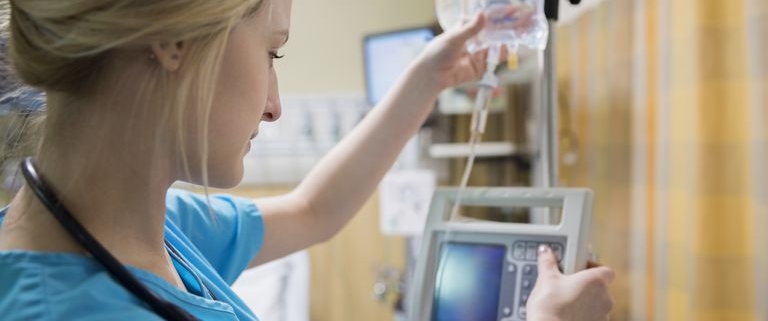
(photo credit: Getty Images)

Source: Kimber Price for Stanford University

Ketamine works as an antidepressant at least in part by activating the brain’s opioid system, new research reports.

The finding overturns previously held beliefs that the drug’s antidepressant effects stemmed solely from its impact on the glutamate system. These beliefs led to the widespread use of ketamine to treat depression and spurred the development of glutamate-blocking drugs for use as antidepressants.

The new finding also highlights the interaction between depression, pain, and opioid addiction and presents an opportunity for clinicians to reframe treatment approaches for these three public health crises.

The researchers believe their work is the first to address how ketamine works in the human brain to provide relief from depression. A paper describing the work appears in the American Journal of Psychiatry.

“Before we did the study, I wasn’t sure that ketamine really worked to treat depression. Now I know the drug works, but it doesn’t work like everyone thought it was working,” says Alan Schatzberg, a professor of psychiatry and behavioral sciences at Stanford University School of Medicine, who shares senior authorship of the paper with Carolyn Rodriguez, an assistant professor of psychiatry and behavioral sciences.

THE RISE OF KETAMINE

Ketamine was developed in the 1960s and has been used for decades as an anesthetic during surgery. It can cause dissociative side effects, including hallucinations, and has been used as a recreational drug. If used regularly, it can lead to dependence.

Although the Food and Drug Administration has not approved the drug’s use for depression, some doctors have prescribed it “off-label” in recent years as a rapid but short-acting antidepressant. Traditional antidepressants, such as selective serotonin reuptake inhibitors, take four to six weeks to have an effect but don’t work in two-thirds of patients who try them.

Stand-alone ketamine clinics have popped up all over the country to administer expensive intravenous infusions of ketamine to patients, even though some scientists caution that not enough is known about the drug to warrant its widespread use for depression.

“THE RESULTS WERE SO CLEAR THAT WE ENDED THE STUDY EARLY TO AVOID EXPOSING ADDITIONAL PATIENTS TO THE INEFFECTIVE COMBINATION TREATMENT.”

Ketamine infusions are also used to treat chronic pain, which is a common condition in depressed patients. Exactly how ketamine blunts pain is not fully understood, but scientists know it works at least in part on the opioid system.

The researchers wanted to see if the antidepressive effects of ketamine were also generated by its activation of the opioid system. To answer that question, they conducted a small clinical trial in which people with depression were given an opioid-receptor blocker prior to taking ketamine.

The researchers recruited adults with treatment-resistant depression, meaning their condition had not improved after multiple treatment efforts. Twelve participants received infusions of ketamine twice—once preceded by naltrexone, an opioid-receptor blocker, and once with placebo. Neither the study participants nor the researchers knew whether active drug or placebo was administered during each test.

The findings showed that ketamine reduced depressive symptoms by about 90 percent for three days in more than half of the participants when administered with a placebo, but had virtually no effect on depressive symptoms when it was preceded by naltrexone.

“This was purely a mechanistic study, not a treatment trial,” says Nolan Williams, a clinical assistant professor of psychiatry and behavioral science. “And the results were so clear that we ended the study early to avoid exposing additional patients to the ineffective combination treatment.”

Because the field of anesthesia has long regarded ketamine specifically as a nonopioid drug, co-lead author Boris Heifets, a clinical assistant professor of anesthesiology, perioperative, and pain medicine, was skeptical when Williams approached him about joining the research effort.

“Everything that I was taught, and everything that I’ve always taught my students—all of the evidence supports the fact that ketamine is not an opioid,” Heifets says. “I was really surprised at the results.”

HOW DOES IT WORK?

Although some small studies have shown that ketamine has rapid, although transient, antidepressant effects, Schatzberg says the researchers wanted to understand how ketamine works. He says he came to suspect that ketamine’s effects might be linked to the brain’s opioid system when Rodriguez published a report on ketamine’s ability to reduce symptoms of obsessive compulsive disorder, which was similar to previous research using the opioid morphine.

The prevailing hypothesis for ketamine’s antidepressant effect was that the drug blocked a receptor for glutamate, an excitatory neurotransmitter in the brain that is implicated in memory and learning.

“But ketamine’s mechanism is complicated, as it acts on many different receptor types beyond glutamate receptors, and it acts in three distinct phases—rapid effects, sustained effects, and return to baseline,” Rodriguez says.

Schatzberg notes that no other glutamate-receptor blocker has an antidepressant effect like ketamine and that attempts to develop similar drugs have largely failed.

The researchers say the findings from the new study may explain why ketamine works so quickly as an antidepressant: It activates the brain’s opioid receptors during its first phase of activity. The glutamate system may be responsible for the sustaining effects after ketamine is metabolized, they say.

Revealing the role of the opioid system in the antidepressant effects of ketamine is critical in the effort to develop new antidepressants, the researchers say. For instance, glutamate receptor blockers may not have rapid antidepressant effects unless they also involve the opioid system, Williams says.

“THERE IS TRULY A LINK BETWEEN DEPRESSION, PAIN, AND OPIOID USE. YOU CAN’T GO AFTER ONE WITHOUT ADDRESSING THE OTHERS.”

“Psychiatry used opioids, barbiturates, and high doses of stimulants to treat depression 50 or 60 years ago,” Schatzberg says. “We have to properly examine the risks associated with using drugs of abuse—even in low doses—to treat depression. It’s not limited to ketamine; other antidepressant drugs that target the opioid system are in development now, too.”

While a standard opioid like morphine initially has an antidepressant effect, it promotes depression after repeated use, Williams says. People who are depressed take as much as 2.4 times as many opioids immediately after painful surgeries than those who aren’t depressed, he says. “There is truly a link between depression, pain, and opioid use,” Heifets says. “You can’t go after one without addressing the others.”

Rodriguez has consulted for Allergan, BlackThorn Therapeutics, and Rugen Therapeutics. Schatzberg has consulted for Alkermes and Avanir, has equity in Corcept and Merck, and received a grant from Janssen Pharmaceuticals.

The National Institutes of Health, the Brain and Behavior Research Foundation, the Avy L. and Roberta L. Miller Foundation, and the Pritzker Family Fund funded the study. Stanford’s psychiatry and behavioral sciences department also supported the work.

Source: Kimber Price for Stanford University

This article was originally printed on at https://www.futurity.org/ketamine-depression-1860752/ by Stanford University and is reprinted with permission under the Attribution 4.0 International License.