Ketamine Infusion vs. Nasal Esketamine: What’s the difference?

Clinical History

Ketamine, sometimes known as the party drug Special K, is a compound made of two mirror-image molecules. It has long been approved as an anesthetic, is not covered by a patent, and is widely used — meaning it’s not going to make much money for a pharmaceutical company.

Ketamine has been an FDA approved anesthetic for decades and is the anesthesia of choice for children because of its excellent safety profile.  Research also demonstrates efficacy for anxiety, PTSD, chronic pain, fibromyalgia, and more.  However, IV ketamine remains “off label” for these purposes because it is not FDA indicated for this use.  The FDA will most likely never approve ketamine for any indication other than anesthesia since the patent for ketamine has expired.  Without a patent, pharmaceutical companies are unlikely to invest in the costly clinical trials necessary to meet the FDA’s requirements for approval, simply because they cannot monetize the drug.

Instead, Janssen Pharmaceuticals decided to patent the left part of the molecule or the “S” particle, hence “ESketamine”, and invested in clinical trials that led to the current FDA indicated use of nasal esketamine called Spravato, which, in the process, then legitimized the use of ketamine for depression.

Molecular Makeup

Esketamine is part of ketamine. In nature, many molecules exist as mirror images of each other, the only difference being the direction they spin. A mixture of these mirror-image molecules is called a racemic mixture. It is possible to separate racemic mixtures into what are called enantiomers. Esketamine is the s-enantiomer of ketamine.

1. Janssen Press Release.Janssen Submits Esketamine Nasal Spray New Drug Application to U.S. FDA for Treatment-Resistant Depression. Sep 2018).

Administration

Both ketamine and esketamine can be delivered intravenously, intramuscularly, or intranasally.  However, intravenous delivery is the most effective when it comes to the absorption, accuracy, and efficacy of the dose. 

FDA approval of esketamine for treating depression requires that the drug be administered as a nasal spray. In addition, patients must be taking another antidepressant at the same time, and it can only be given to patients who have unsuccessfully tried two antidepressants. Spravato is only available in certified clinics. Doctors must order medication for a patient and pick it up at a specialty pharmacy. The patient will self-administer the nasal spray in the doctor’s office, stay in the office for two hours of monitoring, and then be taken home. The Spravato never leaves the facility.

Treatment Dosage

Intranasal Spravato is given twice weekly for 4 weeks, then once weekly for 4 weeks, then

every two weeks to continue maintenance. The currently recommended doses are either 56 mg or 84 mg. Two hours of observation are required at each treatment before discharge.

Ketamine Infusions consists of 5-6 treatments over a 1-2 week period.  Subsequent

maintenance occurs every 2 to 4 months. A single treatment takes approximately 40 minutes.

Side Effects

Potential side effects for both drugs include sedation and mild dissociation.  On awakening from an IV infusion, patients may experience blurred vision, feelings of lightness, and, rarely, headache or nausea (prevented by including an iv anti-nausea medication with the infusion). 

In addition to the same side effects from IV administration, intranasal doses may also cause vertigo, decreased sensitivity, anxiety, and vomiting.

Success Rate/Effectiveness

Some studies have shown that more than 70-80 percent of those who try IV ketamine feel better. And 45% of nasal ketamine patients find relief.

Source: https://www.ncbi.nlm.nih.gov/pmc/articles/PMC3677048/, https://www.ncbi.nlm.nih.gov/pmc/articles/PMC4185009/

Mechanism of Action

Ketamine/esketamine modulates glutamate NMDA receptors resulting in an increased production of neurotrophic factors (particularly BDNF) that repair damaged neurons and improve neuronal connectivity within the brain. 

Costs

Johnson & Johnson list the wholesale cost of Spravato to be $590 for the 56 mg dose and $885 for the 84mg dose.  In the first month that would cost $4,720 to $6,785 before facility fees.

Ketamine treatments usually cost a few hundred dollars per infusion, but the expense comes not from the generic drug, which is cheap, but from the doctors’ time and the clinic space.

Covered by Insurance

FDA approval and insurance coverage are not simultaneously guaranteed or guaranteed with the same clinical guidelines.  It is yet to be determined how the insurance companies will cover the costs of Spravato, or what clinical guidelines will be required for authorization of coverage.

Ketamine Infusions are not currently covered by insurance.

Conditions Treated

Spravato is indicated, in conjunction with an oral antidepressant, for the treatment of treatment-resistant depression (TRD).  Ketamine Infusion Therapy has been found effective in treating TRD, PTSD, Bipolar Depression and multiple chronic pain conditions.

Research demonstrates that ketamine is also an effective treatment for TRD when used intravenously (IV) in low doses (approximately 1/10 of anesthetic doses).  More recently, research also demonstrates efficacy for anxiety, PTSD, chronic pain, fibromyalgia, and migraines.

Virginia Ketamine Therapy offers infusion therapy only and does not offer Spravato. For more information on Ketamine Therapy, contact Dr. Newman and Virginia Ketamine Therapy, 757-258-2561 or visit vaketaminetherapy.com.
ketamine cured depression, offered hope

How Ketamine Cured My Depression and Offered Hope

Shawn Snyder has battled depression for most of her life. She had come to believe that suicide was her last option. But a few months ago a friend suggested ketamine therapy as a means to overcome. Five treatments later, Shawn could immediately tell a difference. “The ketamine treatment has been the best thing — better than my antidepressants,” she said. “And literally, I do not think of suicide now as an option.”

From her childhood days as a military brat in elementary schools in Belgium, Shawn struggled to fit in. She attended the DoD military school and later was enrolled in a strict French school choosing to participate in destructive behavior as her cry for help. Coupled with other childhood trauma, Shawn began suffering with depression.

In 1988, Shawn married in an attempt to escape, and began seeking professional relief from depression — determined to battle her demons. She met with psychiatrists and therapists, attended group counseling, and was prescribed numerous antidepressant and anti-anxiety medications. While acknowledging that they helped in part, she could never get out from under the looming cloud of grey.

Nine years later, Shawn would have to accept the fact that her marriage wasn’t going to last, and her feelings of failure led to a deeper depression.

In 2010 she suffered a traumatic brain injury at work, cracking her skull and resulting in multiple hematomas, vertigo and concussion symptoms such as memory loss, mood swings, dysautonomia, and severe depression. Workers compensation was denied. She eventually lost her home and moved in with her parents.

Nearly two years ago, Shawn’s mother passed away, adding to her emptiness.

Five months later her boyfriend finished his life. In the midst of her sorrow Shawn would acknowledge that she didn’t see the flags but that “I totally understand what he went through. I can’t be angry at him. I get it.”

Suicide was an option now more than ever.

In March a friend told Shawn about Ketamine Therapy – a relatively new treatment for depression. Ketamine treatments are not covered by insurance and can be pricey, so a few days later on a Friday morning, Shawn visited her bank, secured a loan, and called Virginia Ketamine Therapy to schedule a consultation. An opening just happened to be available that same afternoon, and ketamine treatments were scheduled to begin on Monday the following week.

At the appointment, Shawn was pretty straightforward, “I told Dr. Newman that it’s this or suicide.”

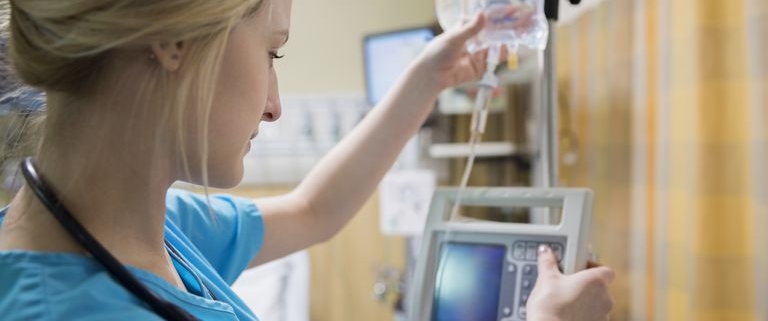
At Virginia Ketamine Therapy, treatments are given by IV and usually last around 90 minutes long. Depression treatments are typically five days in a row to maintain a consistent flow of ketamine in order to provide the most benefit. Most patients see little to no side effects during and following the infusions.

At her first treatment, Shawn felt “loopy.” “Your mind goes in, like [the movie] Lucy. You just feel like you’re zooming in and you can touch and manipulate colors and words. It’s so weird.”

“By the third day of treatment, I could truly say that I noticed a change. I just know that I felt calmer, like there was a relaxing of weight. By the end of the week, I could look back at things and not be so critical about them. [The ketamine] made it not so raw. And literally, I did not think of suicide as an option. I’m so grateful.”

Shawn was hesitant at first to try ketamine infusions since it is a relatively new treatment for depression and is considered off-label for that purpose. There are only an estimated 150 – 300 Ketamine Clinics in the United States.

“I’m just amazed and almost appalled that it’s not available more readily,” she said. “I’m seriously considering looking into doing some type of fundraiser or awareness for people. Because when you’re so depressed, you’re so locked into your own world. “There are people that are suffering, and we don’t know about it. And they just suffer through life. And they don’t have to. So basically, God needs to rain down Ketamine.”

Studies from Yale research labs have shown that Ketamine triggers glutamate production, which, in a complex, cascading series of events, prompts the brain to form new neural connections. This makes the brain more adaptable and able to create new pathways, and gives patients the opportunity to develop more positive thoughts and behaviors. This particular effect had not been seen before, even with traditional antidepressants. (https://www.yalemedicine.org/stories/ketamine-depression/)

Since Ketamine Therapy is not covered by insurance, the treatments do not require a referral, prior authorizations or any other proof of prior medications. This is a bonus for individuals in the workplace where visiting a therapist might reflect poorly on their employment. Ketamine infusions are just between you and your doctor.

Shawn supplements her ketamine treatment with Transcranial Magnetic Stimulation (TMS), reading the book, Mindfulness, and spending time in prayer.

“I always say to myself, you know what? Let’s just lean back and just focus on God for a little bit. Because He’s providing the medicine. He’s providing the tubing that the medicine comes in. You’re just so grateful.”

She has been able to return to work with some semblance of normalcy. And if the ketamine wears off? “Dr. Newman told me, if you feel that you’ve plateaued and you’re starting to fall again, you could come back for another treatment. That is a lifesaver… And the safety net now.”

Virginia Ketamine Therapy is located in Williamsburg, Virginia, and Dr. Mark Newman is a board certified anesthesiologist and pain management physician.
If you have questions about ketamine therapy or would like to inquire about scheduling an appointment, we’d love to hear from you today.  You can call us at (757) 258-2561, email us at info@vaketaminetherapy.com or fill out our contact form and we’ll get back in touch with you.

Ketamine is Successful, Effective Treatment for Veterans Suffering with Depression and PTSD

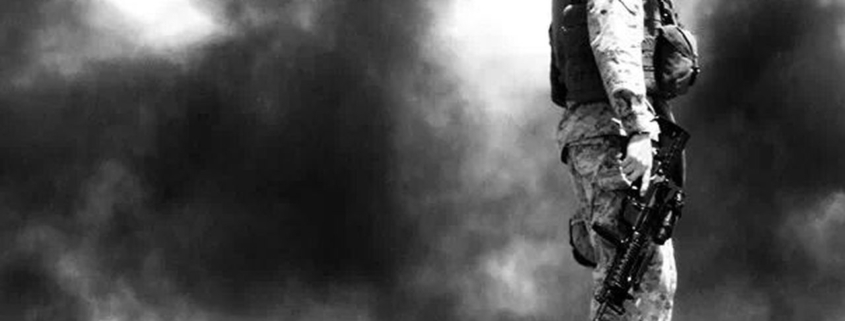
A recent article in the Washington Post examined 19 suicides from October, 2017 to November, 2018 which took place at Veterans Administration facilities and hospitals.  This tragic news, coupled with data from the VA that reports a shocking 6,000+ veteran suicides per year, is both sobering as it relates to those men and women who have served our country, and  yet alarming at the gap in our healthcare system.  As a result, hopeless veterans turn to suicide.

While many lines of treatment have proven unsuccessful, many veterans who suffer from post-traumatic stress disorder and depression have found positive results with ketamine therapy. Several VA hospitals have been  testing the use of ketamine for veterans with a particularly high risk of suicide.

Dr. Punit Vaidya is one of the doctors administering this treatment at the Veterans Affairs medical center in Cleveland.  Results have been very positive and the effects seen within a day.  “If you look at their depression ratings and suicidal ratings given right before treatment and even four hours later you can see a significant reduction and I think that’s really quite remarkable,” Vaidya said. “It’s quite rapid when you compare it to a traditional medication that is offered for depression, and when it comes to suicidality there’s no other medication that’s been demonstrated to have a rapid effect.”

Ketamine therapy should not be viewed as an alternative to the VA but rather a distinct and complementary lifeline for military men and women who may be enduring a more desperate state of mental health.

Depression and PTSD deserve to be seriously addressed and the veterans who have served our country deserve support and relief. If you or someone you know is struggling with an ongoing mental health condition such as PTSD, depression or thoughts of suicide there is hope.

Contact Virginia Ketamine Therapy and Dr. Mark Newman at 757-258-2561 or email info@vaketaminetherapy.com to learn more about ketamine therapy.